
Pressure doesn’t create behavior. It reveals it.
Born in Brooklyn, New York, Kashaun Cooper has spent much of his life fascinated by one question: Why do people become who they become, especially when life puts them under pressure?
Long before that question became part of his professional work, Kashaun was a kid surrounded by music, curiosity, family, and the unmistakable energy of New York City. One of the people who helped shape him was his step-grandfather, Samuel Williams, who introduced him to jazz. That introduction became a lifelong love of the music. Jazz remains Kashaun's favorite genre, not simply because of how it sounds, but because of what it represents: improvisation, discipline, listening, timing, individuality, and the ability to respond to what is happening in the moment.
Kashaun became a musician himself and developed a particular love for playing the drums. Sitting behind a drum set gave him another way to understand rhythm, movement, timing, and human response. Years later, many of the ideas that interested him in music would appear again in his study of people: patterns, reactions, adaptation, and what happens when the environment changes.
Books became another major part of his life. Kashaun developed a deep interest in business and entrepreneurship, eventually becoming an author of several books and hosting his own radio show. He was never interested in keeping ideas confined to one subject. Business led him toward leadership. Leadership led him toward behavior. Behavior led him deeper into psychology, and psychology eventually opened the door to neurobiology and the study of what happens inside the brain and body when human beings experience pressure.
Instead of treating those interests as separate worlds, Kashaun began putting them together.
That intersection became the foundation of his professional work.
Kashaun established Five Stages of Yes Leadership & Development Institute and later developed the public-facing work of The Pressure Institute, where he works as a Human Pressure Specialist. His work examines how people adapt, respond, communicate, make decisions, and change under pressure. He is also the creator of the Pressure System Index, or PSI, and Pressure System Architecture, bodies of work developed to make patterns of human pressure more visible and understandable.
One idea sits near the center of that work: “Pressure doesn’t create behavior. It reveals it.”
For Kashaun, that statement is more than a professional philosophy. It reflects a lifetime of observing people, organizations, relationships, successes, setbacks, decisions, and his own experiences.
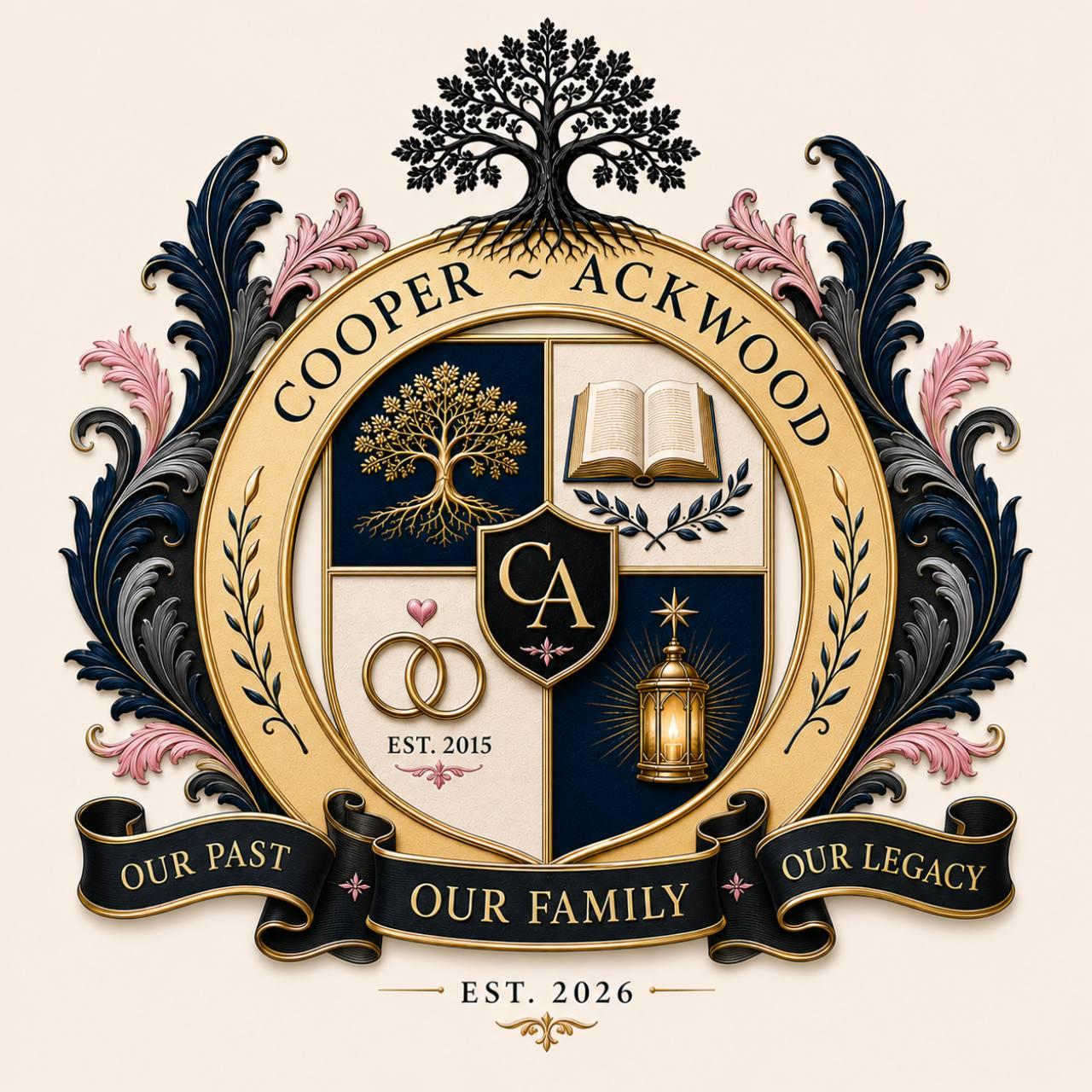
His life has never existed only inside books, classrooms, studios, or businesses. Family is one of its defining chapters. Kashaun is the father of five biological children and the bonus father of two sons. Together with his wife, Domonique, he became part of a blended family whose story eventually inspired something different from his business work: the creation of the Cooper-Ackwood Family Archive.
The archive reflects another side of Kashaun's curiosity. He does not only want to understand where people are going. He wants to understand where they came from.
That interest in history, psychology, family, music, business, and human behavior may appear to span several different worlds, but for Kashaun they are connected. Each provides another way of studying people. A jazz drummer listens for rhythm. A businessman watches decisions. A student of psychology studies behavior. A student of neurobiology asks what is happening beneath that behavior. A father watches generations develop. An author tries to put what he has learned into words.
Kashaun has spent his life doing some version of all of them.
His story is still being written, but its pattern is already recognizable: curiosity became study, study became creation, and creation became something he could leave behind for other people.